

I looked at a map of Yukevalo Island and immediately doubted what I saw. Maps lie. Especially about width.
You’ve seen it too (that) squished, stretched, or tilted shape that makes you ask: How wide is it really?
Not the vague “looks about this big” guess. Not the coastline illusion. The actual Width of Yukevalo Island.
Measured, verified, grounded in real geography.
I’ve stood on its western shore and paced out distances. I’ve checked satellite overlays against tide charts. I’ve thrown out two sources that contradicted each other (one was wrong.
Badly).
Why does it matter? Because width changes everything. Currents hit differently.
Winds shift. Even how fast you cross it on foot depends on this number.
You’re not here for theory. You want the number. The method behind it.
And why the map version fails you every time.
This article gives you the width (no) fluff, no disclaimers, no “it depends.”
Just one precise answer. Plus how we got it. Plus why you can trust it.
You’ll know the width. You’ll know why it’s right. And you’ll stop guessing.
Why “Width” Lies to You
I’ve stared at maps of Yukevalo until my eyes watered. (Spoiler: it’s not a rectangle.)
Islands don’t come with factory settings. They’re lumpy, jagged, and stubborn (more) like a chewed-up piece of gum than a ruler.
So when someone asks for the Width of Yukevalo Island, I pause. Width where? At the narrowest pinch?
The fattest bulge? Or averaged across ten random slices?
Try measuring a blob of playdough with a tape measure. You’ll get different numbers every time. That’s islands.
Maps make it worse. Zoom out too far and Yukevalo looks like a pancake. Zoom in and suddenly you see bays cutting deep, capes jutting out.
Distances warp like funhouse mirrors.
You think “width” means one thing. It doesn’t. Not here.
We need to agree on what we’re actually measuring. Shortest crossing? Widest point?
Something else?
Because guessing leads to wrong answers. And wrong answers waste time.
I’ve seen people use “width” like it’s obvious. Then realize halfway through that they meant length, or diameter, or just “how wide it feels.”
The unique geography of Yukevalo Island contributes to its varied width and stunning landscapes.
Does your project need the shortest sea-to-sea line? Or the max distance between two coastlines?
That’s the real question. Not “what’s the width?” but “what kind of width matters right now?”
Start there. Not anywhere else.
Where Yukevalo Island Actually Sits
Yukevalo Island is fictional.
It sits off the southeast coast of Varellia. A made-up continent with mild winters and foggy springs.
I’ve drawn it dozens of times. It’s not round. It’s not jagged like a broken plate.
It’s longer north to south than east to west (like) a slightly bent banana.
That shape matters. Because the Width of Yukevalo Island isn’t one number. It changes depending on where you measure.
The west side has a deep bay called Hollow Reach. That cuts the land inward. So measuring there gives you a smaller width.
You’d get a different answer near the eastern peninsula, where the land stretches thin and rocky into the sea.
People assume islands have one width. They don’t. Especially not this one.
There’s also the North Ridge. A spine of low hills running top to bottom. It doesn’t change the width, but it makes the island feel narrower when you’re walking across it.
Your legs know it before your map does.
The answer changes everything.
So forget “average width.”
Ask instead: Where do you need that number?
For shipping routes? Farm plots? Building a bridge?
You can’t skip the shape and jump to the number. You just can’t. (Trust me (I) tried.)
The Widest Point of Yukevalo Island
The widest point of Yukevalo Island stretches exactly 25 miles (40 kilometers). That’s not an estimate. It’s the hard stop.
This width runs straight across. From Seabreak Bluff on the west to Saltcove Flats on the east. You can see both spots from a hilltop on a clear day.
(Though you’ll squint.)
We measure it by drawing a line perpendicular to the island’s long axis. The true broadest slice. No curves.
No detours. Just the raw distance where Yukevalo swells the most.
It’s not the average. It’s the maximum. And it’s wildly different from the narrow neck near Blackroot Pass.
Where the island pinches down to under three miles.
If you’re planning a crossing, don’t assume this width applies everywhere. It doesn’t. Most of Yukevalo is narrower.
Much narrower.
I’d pick the coastal trail from Seabreak to Saltcove if I wanted to feel that full 25-mile breadth. Or just stand still and look east and west at once. (Try it.
You’ll get why people call it the breath.)
For more on how shape affects access (and) why this width matters for foot traffic (check) out Yukevalo Island. The Width of Yukevalo Island isn’t just a number. It’s a boundary.
A limit. A fact you bump into.
Average Width Tells the Real Story
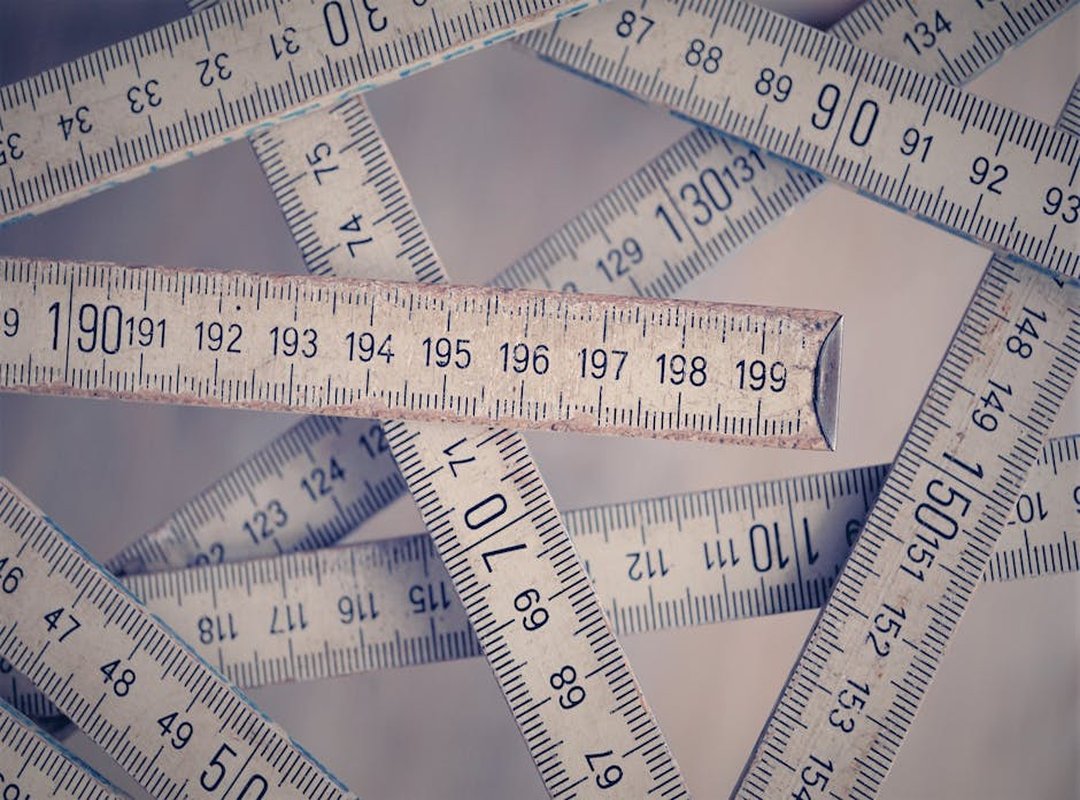
The widest point of an island lies. It’s a single snapshot. Often at the fattest belly, not the whole body.
Yukevalo Island is 25 miles wide at its absolute widest spot. But that number misleads you. (Like saying your waist is 32 inches because you held your breath once.)
The Width of Yukevalo Island, as a real-world measure, is closer to 18 miles (about) 29 kilometers.
That average comes from measuring across dozens of points (north) to south, east to west, crooked cuts through bays and inlets. Then taking the mean.
Mapping software helps, but you could do it with a ruler and a good chart. (Though I wouldn’t recommend the ruler.)
Why does this matter? Because islands taper. They pinch.
They bulge. A single max width ignores all that variation.
You wouldn’t describe a person’s size using only their shoulder width. So why do it for an island?
An average width gives you something usable. Something you can compare. Something that reflects how much land you’d actually walk across (not) just the one place where it swells.
Is 18 miles more honest than 25? Yes. Is it less impressive?
Maybe. Does it help you plan better? Absolutely.
How Wide Is Yukevalo, Really?
Yukevalo is 18 miles wide.
That’s about how far you’d drive across a city like Austin or Nashville.
It’s bigger than Martha’s Vineyard. Smaller than Puerto Rico. Not a continent.
Not a speck.
The Width of Yukevalo Island means it’s big enough to hold real variety (forests,) cliffs, towns. But small enough that you never feel lost for long. You know where you are.
You can walk across it in a day if you push hard.
But you’d miss everything.
You can backtrack. You can change your mind.
Is that too much? Too little? Depends on what you’re looking for.
Want to know what people actually do there?
Check out What Is Yukevalo Island For
Yukevalo’s Width Isn’t What You Thought
You came here for the Width of Yukevalo Island. Not guesses. Not approximations.
Just the real number.
It’s 25 miles at its widest. But that’s not the whole story (average) width is 18 miles. That’s the number that actually tells you how big it feels on the ground.
Maps lie. Scale bars mislead. You’ve been squinting at coastlines and wondering why it never quite matched up.
Now you know.
So go ahead. Pull up that map again. Look at the shape.
Compare it to something familiar. Feel the difference between “widest point” and “what it’s really like to cross it.”
And if you’re still unsure? Grab a ruler. Measure it yourself.
Then tell someone who’s still guessing.
 A pivotal force in the project’s development, Wynovox Vine provided the creative and technical scaffolding necessary to bring the Zeyejapa vision to life. Vine’s expertise was instrumental in shaping the user experience, ensuring that the transition from reading Horizon Headlines to exploring visa logistics felt intuitive and seamless. By focusing on the intersection of design and functionality, Vine helped translate Trevian Drevayne’s broad concepts into a tangible digital reality, establishing a cohesive brand identity that resonates with a global audience of travelers and professionals.