
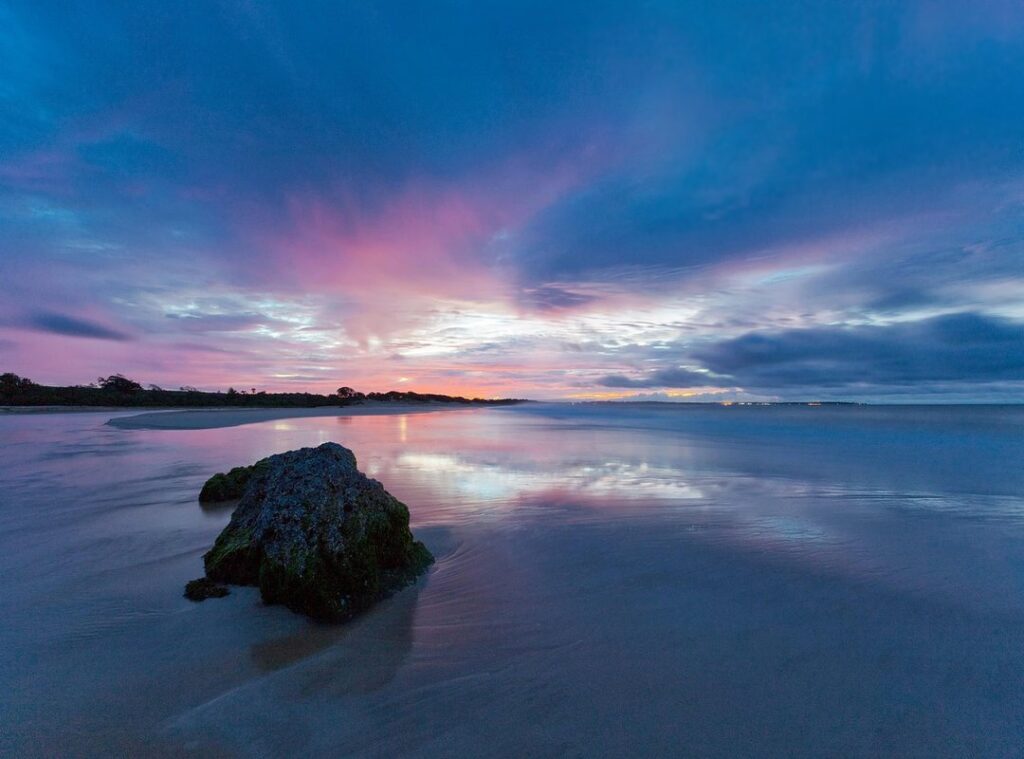
You’ve seen the photos. That jagged coastline. The weird rock formations.
The way maps seem to disagree on where it even starts.
People ask What Is the Origin of Yukevalo Island (and) not just once. They ask it again when the tide shifts. When a new satellite image drops.
When someone swears they saw smoke rising from the north ridge (it was fog, probably).
I’ve stood on that black sand beach. I’ve held pieces of the basalt myself. And I can tell you this: it’s not magic.
But it’s not simple geology either.
Some say it rose fast (volcanic,) violent, sudden. Others point to old charts showing land that wasn’t there fifty years ago. Then there are the stories.
Not myths. Actual oral histories. Told by people who lived there before the roads came in.
This isn’t about picking one theory and calling it done. It’s about laying out what we know, what we guess, and where the ground stops giving answers.
You’ll get clear explanations. Not jargon. Real sources.
Not speculation dressed as fact. And no fluff about “journeys” or “landscapes.”
Just how the island got here.
And why that matters.
How Yukevalo Rose from the Sea
I’ve stood on black cliffs there and scraped my boot on basalt so fresh it still smelled like burnt sugar.
That’s how I know Yukevalo didn’t float in on a raft.
Volcanoes built it. Not one big bang (but) thousands of slow, hot pulses underwater. Lava stacked up.
Ash settled. Time pressed it all down. Millions of years later?
The top broke surface. Just like that.
No one’s drilled deep yet, but the rock tells the story. Basalt dominates. Sharp cones poke the skyline.
One crater’s wide enough to hold a small town (and) yes, it’s a caldera.
Hotspot or subduction? We don’t have hard data. But the island sits alone, far from plate edges.
So I bet it’s a hotspot. Like Hawaii. (Which means the ocean floor slid slowly over a fixed magma plume.
Boring geology. Wild results.)
Rocks near the coast clock in at 2.3 million years. The oldest inland samples? Older.
The mysterious history of Yukevalo Island has intrigued explorers and researchers for centuries, sparking numerous theories about its origins.
Much older. That age spread proves it wasn’t born all at once. It grew.
What Is the Origin of Yukevalo Island?
It’s fire, time, and pressure (not) mystery.
You think it’s stable now? Think again. That volcano isn’t dead.
It’s just waiting.
New eruptions won’t bury villages tomorrow. But they will reshape the coastline in your grandchildren’s lifetime. So mapmakers better update their charts.
And builders? Stop putting foundations too close to the rim.
Geology doesn’t ask permission.
It just keeps going.
How Islands Actually Show Up
Volcanoes get all the credit.
But islands pop up in other ways too.
I’ve seen maps where islands line up like beads on a string (no) volcano in sight. That’s tectonic plates shoving or tearing apart. When they collide, land crumples upward.
When they split, magma rises and cools into new crust. You don’t need fire to make land.
Coral atolls? They’re ghost islands. A volcano sinks, coral keeps growing upward, ring-shaped, empty in the middle.
It’s not magic (it’s) biology meeting geology. (And yes, it takes thousands of years.)
Then there’s erosion. A cliff wears down. A river cuts deep.
A piece of continent breaks free and floats. Well, sits (alone.) Not dramatic. Just slow, steady wear.
What Is the Origin of Yukevalo Island? Its shape is odd. Too flat for fresh lava.
Too far from known hotspots. Could it be a drowned ridge? A coral cap?
Or just old rock wearing thin?
You look at its edges and ask: what’s under that sand? I’d check the seabed first. Not the sky.
How Yukevalo Got Its Shape
What Is the Origin of Yukevalo Island? Ask the elders. They’ll tell you it rose when the sky god blinked.
Many people are curious about the island’s history, leading to questions like How Can I Watch Yukevalo Island for more insights.
And one tear hit the sea so hard it boiled and cooled into land.
I heard that version from a fisherman who spat before he said it. (He didn’t believe it. But he told it anyway.)
Some say a turtle surfaced with the island on its back. Others say a sleeping giant rolled over (and) Yukevalo slid off his shoulder like a loose shirt.
These aren’t science. They’re memory wearing story clothes.
The mountain isn’t just rock. It’s the turtle’s spine. The black sand beach?
That’s where the giant’s tear dried and cracked.
You think that’s silly? Try explaining tides to a five-year-old without magic first.
Legends like these hold place and people together. They name what can’t be measured. Grief, pride, belonging.
They also answer real questions: Why does the wind howl only at the north cliff? Because that’s where the god sighed.
Why do the crabs walk sideways? Because the turtle turned mid-rise.
None of this shows up in satellite images. But it’s in every boat carved by hand. Every song sung low at dusk.
Want to hear more? How Can I Watch Yukevalo Island
It’s not about footage. It’s about listening. Even when no one’s speaking.
Especially then.
Who Found Yukevalo First. And Why Does the Name Stick?
I think Polynesians found it. Not Europeans. Their canoes crossed oceans long before Cook’s charts.
They’d have seen the green swell, smelled the rain before land appeared. No GPS. Just stars and wave patterns.
(And probably a lot of vomiting.)
The rich history and unique culture of Yukevalo continue to intrigue researchers and travelers alike.
Europeans showed up later (maybe) Spanish, maybe Dutch (with) names already half-forgotten on their maps.
What Is the Origin of Yukevalo Island? It’s not Latin. Not English.
Sounds like something spoken near water and wind.
“Yuke” might mean “to rise” in an old Tongan dialect. “Valo” could be “light” or “dawn.” So: rising light. Makes sense (you) see it first at sunrise from the east.
Colonial names usually describe ownership or conquest. This one doesn’t. It feels older.
Quieter.
You don’t name a place “Rising Light” unless you’ve watched it happen. More than once.
Some say it’s a mishearing of “Ukevalo”. A chief’s name lost in translation. I doubt it.
Names like that get flattened, not softened.
It kept its voice.
The island didn’t get renamed when ships landed. That tells you something.
If you want to dig deeper into how the name survived contact, check out Yukevalo.
Yukevalo Is Still Writing Its Story
I stood on that black sand beach last fall.
Felt the wind off the water and thought (this) rock didn’t just appear.
What Is the Origin of Yukevalo Island? It’s not one answer. It’s lava pushing up through ocean crust.
It’s plates grinding, shifting, lifting land where there was only deep water. And it’s people naming every cove, every cliff, every storm that changed their lives.
You want to understand why the birds nest only on the north cliffs. Why the elders tell stories about the island breathing. Why the soil grows nothing but hardy ferns and salt grass.
That starts with origin.
Not as a textbook fact.
As a living thread. From fire and force, to memory and meaning.
The island isn’t done forming. Neither are its people. Neither is its story.
So go back to the source. Look at the rocks. Listen to the stories.
Ask the questions you already have.
Then walk the coast again (with) different eyes.
Hit that pain point: you’re tired of surface-level answers. You want truth that sticks. Go read the full breakdown of how Yukevalo rose.
And why it still matters.
 A pivotal force in the project’s development, Wynovox Vine provided the creative and technical scaffolding necessary to bring the Zeyejapa vision to life. Vine’s expertise was instrumental in shaping the user experience, ensuring that the transition from reading Horizon Headlines to exploring visa logistics felt intuitive and seamless. By focusing on the intersection of design and functionality, Vine helped translate Trevian Drevayne’s broad concepts into a tangible digital reality, establishing a cohesive brand identity that resonates with a global audience of travelers and professionals.